The TikTok Shop Flywheel: A Phased System for Sustainable Growth
7th August 2026
There is no single strategy that works for every brand on TikTok Shop, but there is a repeatable system. The brands that scale well, whatever their category or budget, tend to move through the same three stages in the same order, known as the TikTok Shop Flywheel. Understanding that sequence is the difference between growth that compounds and growth that stalls out after an early spike.
A Three Sided Marketplace (The TikTok Shop Flywheel), Not a Storefront
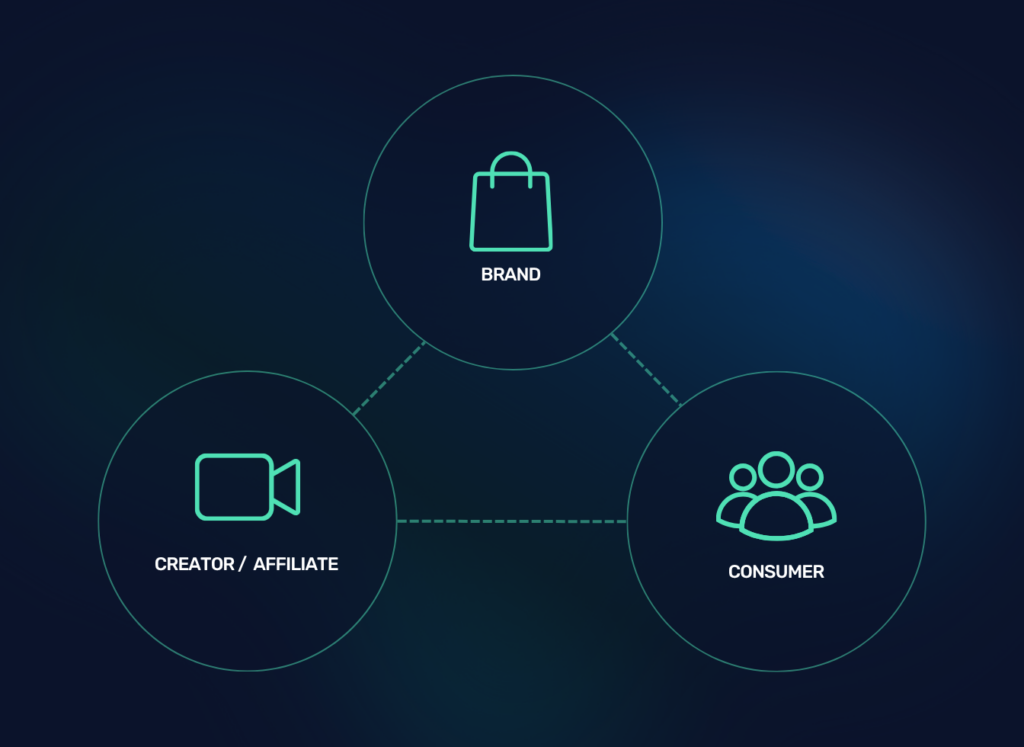
TikTok Shop connects three parties, not two: brand, creator, and consumer. Each relationship inside that triangle works differently.
The relationship between brand and consumer is the one every brand already understands, covering product, price and promotion. The relationship between creator and consumer is where most sales actually originate, since the creator is producing content their own audience already trusts. The relationship between brand and creator is the engine underneath both of these, a community of creators producing volume that gets tested, learned from, and then amplified with paid media.
Most brands that struggle on the platform focus almost all of their energy on the consumer side and forget the other two exist. The brands that scale well treat the creator relationship as the priority, particularly in the early stages, and let the consumer side follow as a result.
The Three Stage Flywheel
Stage One, 0 to 3 Months: Foundations
Before anything else, the shop itself needs to be properly set up and stress-tested end-to-end. Most early failures trace back to incomplete setup or a misunderstanding of platform rules, not to weak product or poor creative.
Once the foundations are solid, focus narrows to a single hero product rather than the full catalogue. That product should be priced and packaged specifically for TikTok’s impulse-driven buying behaviour, with a commission structure strong enough to attract the first wave of creators. Trying to sell an entire catalogue at once, before the systems and creator relationships exist to support it, is one of the most common ways brands slow their own progress in this stage.
Stage Two, 2 to 6 Months: Volume
This stage is about aggressive, short and sharp activation. Brands scaling well in this window are often producing 300 or more pieces of creator content a month, because volume is what surfaces winning formats. Retainers keep that output consistent, and periodic short, high-intensity pushes are used to spike volume further when momentum needs a boost.
Paid media plays a specific role here. Ads are used to amplify content that is already converting, not to discover what will convert in the first place. Creative volume is the fuel, and ad structure is the engine, but the engine only works once there is fuel to burn. Brands that reverse this order, spending heavily on ads before they have a creative backlog, consistently see weaker returns.
Stage Three, 4 Months Onward: Longevity
Once momentum exists, the focus shifts from finding what works to owning it. That means building a closed creator community rather than relying on cold outreach for every campaign, gamifying output to keep engagement high, and rotating opportunities so the same creators do not burn out or go stale.
This is also the stage where brands start developing their own affiliate-style channels, taking their best-performing content and folding it into their own acquisition strategy, then feeding what they learn back to the wider creator community. Consistent live selling and platform-level tools such as reviews and CRM start to compound results meaningfully at this point, turning a good stage two into a durable, longer-term channel.
Why The Sequence Matters
Every brand blends these three stages differently depending on budget, category and stock levels. A brand with a longer sales cycle might spend more time in foundations, while a brand with strong existing demand might move through volume faster. What does not change, across categories and budgets, is the sequence itself. Skipping ahead, particularly moving into heavy ad spend before the creative volume exists to support it, is one of the most common reasons brand growth on TikTok Shop stalls.
Understanding which stage a brand is actually in, rather than which stage it wishes it were in, is usually the first useful diagnostic conversation to have.
We break the TikTok Shop Flywheel down in more detail, including the specific platform levers worth prioritising at each stage, in our free TikTok Shop Mastery Guide.