What Is TikTok Shop? (And Why It Isn’t Just Another Sales Channel)
14th July 2026
What is TikTok Shop? It’s grown faster than any marketplace in history. Here is what makes it structurally different, and why treating it like a normal channel is the fastest way to underperform on it.
The social commerce shift
Social commerce blends e-commerce with social media so that a purchase happens natively, in-app and in-video, without the shopper ever leaving the platform. It replaces the traditional model of building a platform and then spending years attracting customers to it. Instead, the customer is already there, already paying attention, and the commerce layer meets them at the exact point of interest.
Every traditional marketplace follows the same order: build the platform, then spend years attracting customers to it. TikTok Shop reversed that order. It launched as a social platform first, already carrying an engaged, attentive audience, and layered commerce on top of it afterwards.
A different speed of growth entirely
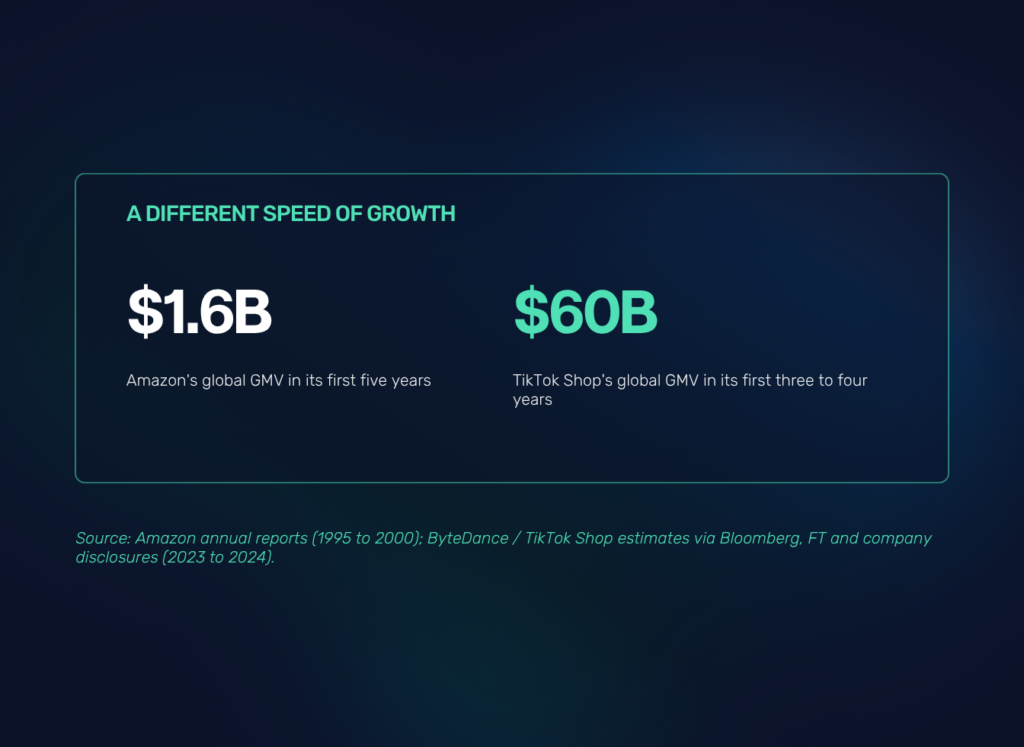
Amazon generated 1.6 billion dollars in global revenue across its first five years. TikTok Shop has generated an estimated 60 billion dollars in its first three to four years. That gap is not a story about TikTok being trendy. It is proof that consumers buy through storytelling and connection with other consumers, at a speed and scale traditional marketplaces were never built for.
We talked through this exact comparison, and what’s driving it, in a recent webinar with TikTok Shop’s own UK team. [Worth a watch if you want the fuller picture →]
Discovery, trust, purchase, all in one place
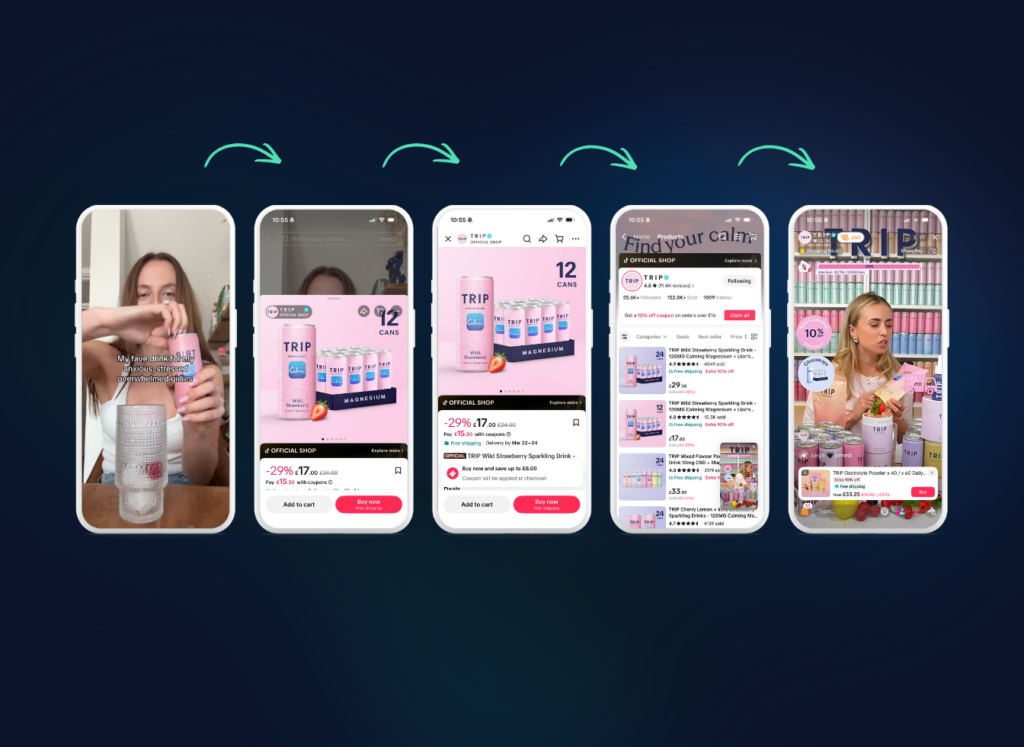
A video appears in a shopper’s feed, placed by a brand or an affiliate creator. Interest builds inside that same video. A pop-up allows the shopper to purchase without leaving it. There is no push to an external website and no drop-off along the way. That single-platform journey, from discovery through to trust and then purchase, is what makes TikTok Shop fundamentally different from running paid social that drives traffic elsewhere.
Why this matters for brand owners now
This is not a suggestion to abandon an omnichannel strategy. It is a case for understanding TikTok Shop on its own terms before deciding how much weight to put behind it. Brands that treat it as a smaller version of their existing e-commerce approach tend to struggle. Brands that understand it as a genuinely different system, built around creators and native content rather than ads and a storefront, are the ones scaling fastest.
This is the first of ten frameworks covered in our free TikTok Shop Mastery Guide.