Five Lessons from AMAFEST UK 2026: What Amazon Sellers Need to Know
1st November 2026
Last month I spent the day at AMAFEST UK 2026 in Birmingham, one of the UK’s biggest gatherings of Amazon sellers, agencies and service providers. Fourteen talks ran from early morning to late afternoon, covering everything from US expansion and Amazon Japan to Vendor Central, TikTok Shop and AI.
What stood out most was not any single talk, but how often the same ideas came up from speakers who had never compared notes. Five themes ran through the whole day, and each one has a direct bearing on how brands should be running their Amazon business going into 2027.
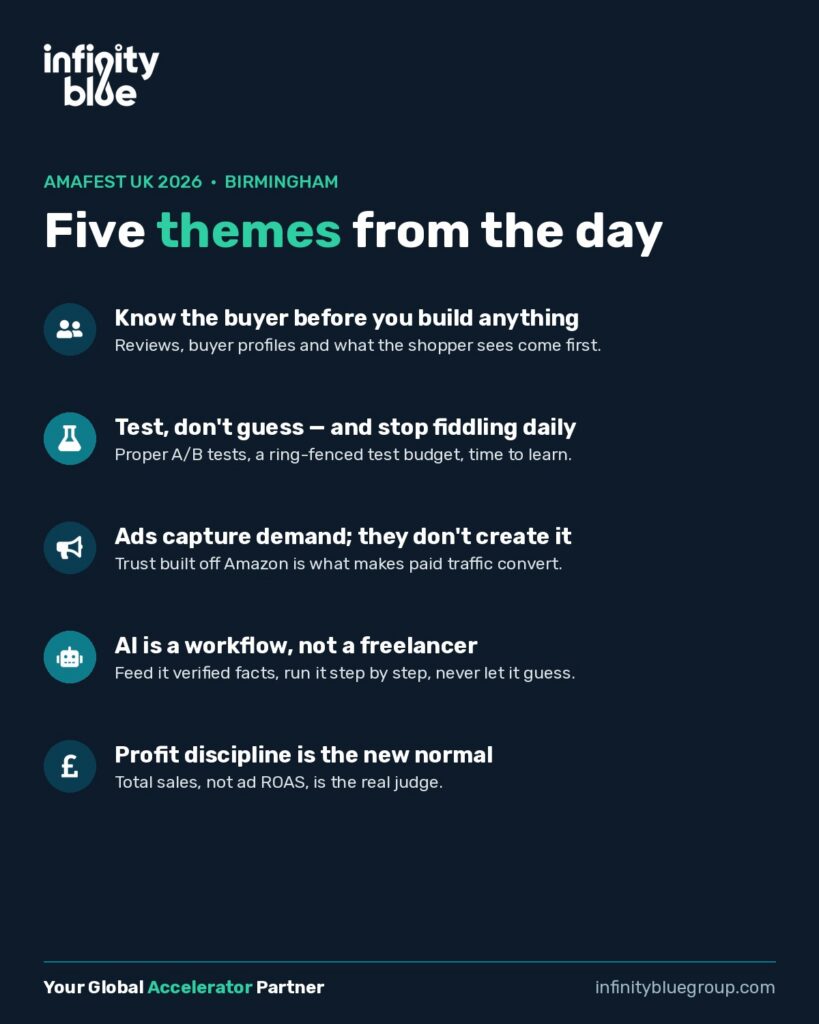
AMAFEST UK 2026: Know the Buyer Before You Build Anything
Kamaljit Singh opened his talk on Amazon creative with a simple instruction: before you design a single image, analyse who is actually buying the product. His process starts with the reviews. He reads them for sentiment, pain points, praise, and the features customers keep asking for, then turns that into clear buyer profiles. In his worked example, one profile accounted for more than half of all buyers, and every image decision followed from it.
Jess Howes made the same point from a strategy angle. When sales fall below target, her advice is to work down from the top: is the product in stock, where is the traffic coming from, and only then, have we given shoppers enough reason and confidence to choose us? That means looking at the listing exactly as a shopper sees it, down to whether it is obvious how many items are in the pack.
Or Shamosh showed what happens when a listing loses sight of the buyer and the rules. Amazon judges a product by what the listing claims, not just what it is. A plain candle is fine; describe it as repelling mosquitoes, and it becomes a regulated pest-control product. A wooden box is fine; fill it with herbs and food rules apply. His simple test for every listing: what does it promise, can the product back that up, and what could a buyer misunderstand?
Test, Don’t Guess, and Stop Fiddling Daily
Kamaljit was clear that the old debate about AI-generated images versus photography misses the point. He tests both and keeps whichever earns the better return. His testing order is worth copying: in month one, test the secondary images; in month two, test the main image. He uses a meaningful sample of around 100,000 sessions per test, combined with audience feedback. In three weeks of main image tests, new images added more than $150,000 in annual revenue for the brands he showed.
Ladipo Fagbola brought the same discipline to advertising. Download the search term report, keep branded and non-branded searches strictly separate, and build a small high-spend core of three to five keywords. Then review it every two weeks, not every day. The algorithm needs time to learn, and constant tweaking makes it impossible to tell what is working. Pause or exclude poor keywords, but never archive them.
He also recommended ring-fencing around 3% of the advertising budget for testing new channels. Less than that rarely moves the needle.
Ads Capture Demand; They Don’t Create It
Neil Curtis of Rising Sun Commerce told the most memorable story of the day. Two established watch brands, one British and one American, launched on Amazon Japan with the same problem: nobody there knew them. Brand A put everything into Amazon itself, with listing tests, coupons and constant ad optimisation. Brand B built trust around Amazon instead, through YouTube reviews, blogs, specialist media, product gifting, a Japanese website and local social channels.
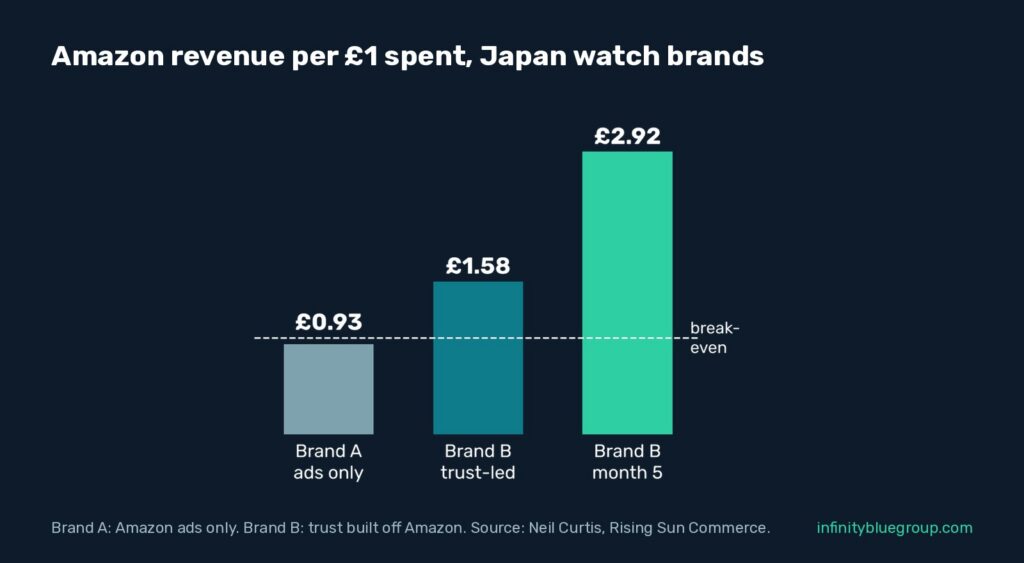
Brand A lost money, and when it paused its generic ads in month seven, sales fell to zero. Brand B sold almost twice as many units on a similar budget, and searches for its brand name rose sharply. His conclusion applies well beyond Japan: for a considered purchase in a market that does not know you, ads can only capture demand that already exists. The trust has to be built first.
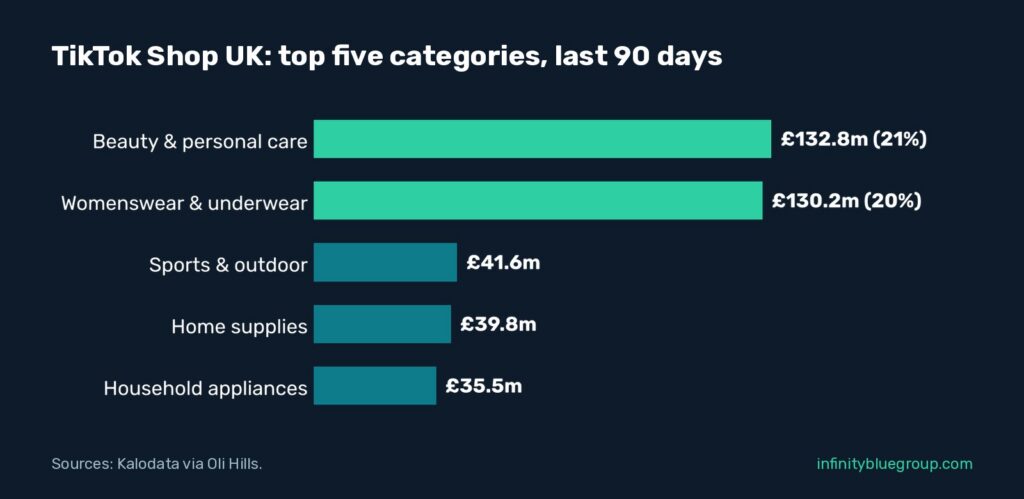
Oli Hills showed the same pattern on TikTok Shop, which took £639 million in UK sales over the last 90 days. Across the top 20 UK shops, 87% of sales came through affiliate creators rather than the brands’ own accounts. His point was that it is very hard to make TikTok Shop profitable without them. Send a £5 product to 1,000 creators and you have spent £5,000; if each makes around ten videos, that is 10,000 pieces of content working for the brand.
AI Is a Workflow, Not a Freelancer
AI came up in almost every session, but the most useful talks were about how to use it well rather than whether to use it at all. Kamaljit described the old approach as treating AI like a freelancer: hand it the whole job and accept what comes back. The better approach is a loop of prompt, test, learn and improve.
Dvir Cohen of EZ-Commerce showed what that looks like in practice. Most sellers use AI for one-off requests such as “write me a better title”. His workflow runs in four connected steps: give the AI the verified product facts, add market and performance data, build a detailed 30-day action plan, and only then create video scripts and banners. Every prompt carries the same rule: every claim needs a source, and if something is missing, ask rather than guess.
Pablo Lepeña of E-Commerce Grand Masters shared the results of 500 hours of AI work. Building or optimising a listing used to take two days of his best people; with a structured workflow, it now takes twenty minutes. Amazon’s Search Query Performance report, which gives you hundreds of keywords and no clear answer, can now be read and summarised the way an expert would.
Profit Discipline Is the New Normal
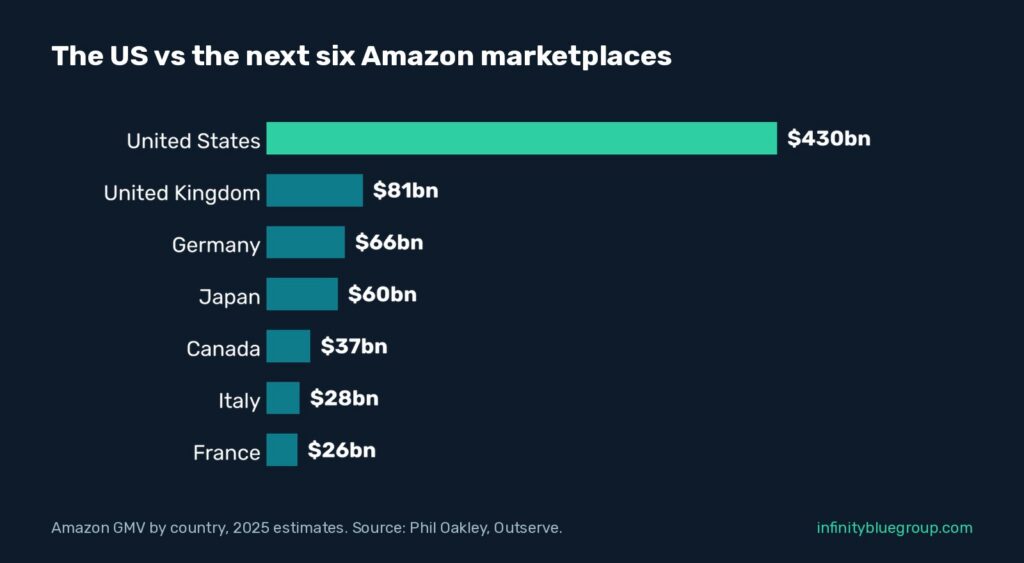
Phil Oakley of Outserve opened the day with the case for the US. Amazon US sold around $430 billion in 2025, more than the UK, Germany, Japan, Canada, Italy, and France combined. For UK brands, it remains the biggest prize on the platform.
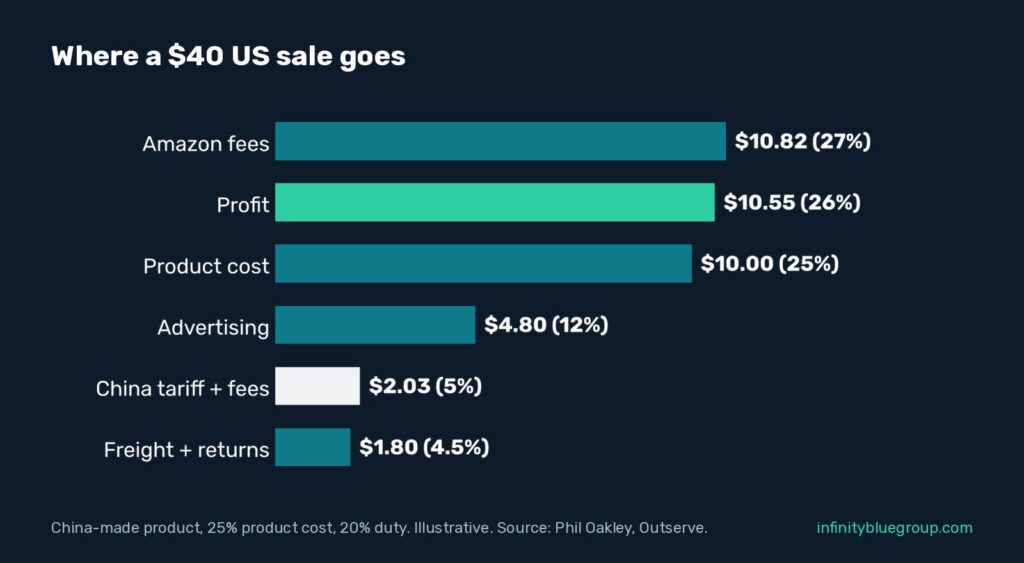
But his breakdown of a $40 US sale showed where the money really goes. On a product made in China, the tariff takes about 5% of the price. Amazon fees and advertising together take 39%. Tariffs make the headlines, but fees and advertising efficiency decide whether US expansion pays. He also reminded the room that duty follows where a product is made, not where it ships from, so repackaging in the UK does not change its origin.
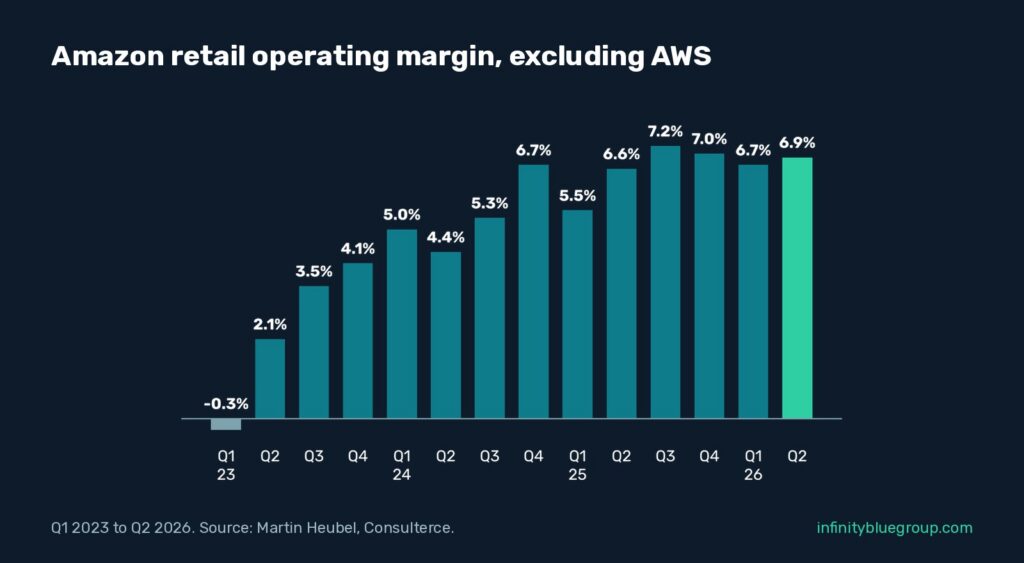
Martin Heubel of Consulterce showed that Amazon itself is now chasing profit, not just growth. Its retail operating margin, excluding AWS, has risen from slightly below zero in early 2023 to around 7% today, driven largely by advertising.
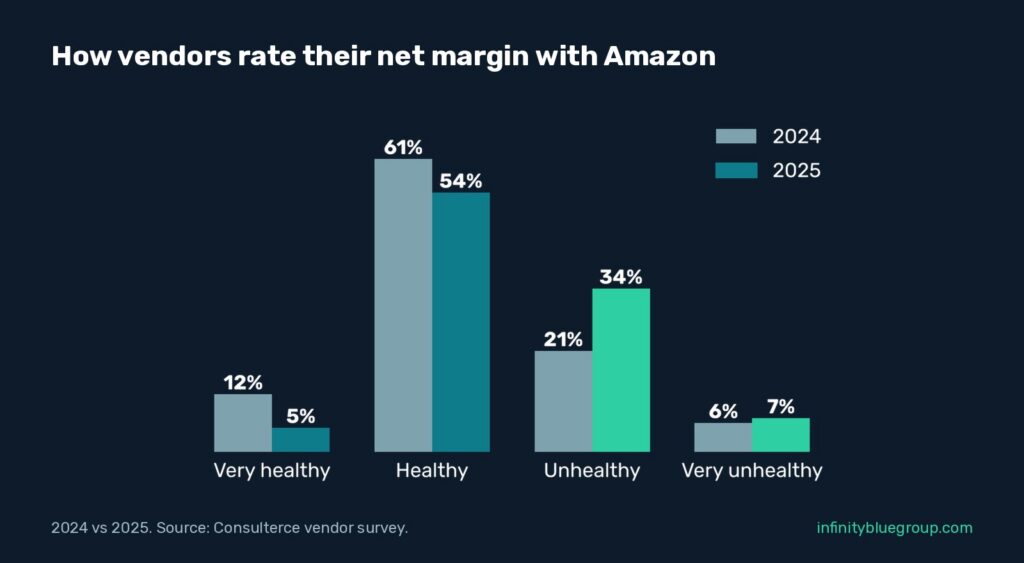
For brands selling to Amazon as vendors, that pressure is being felt. In Consulterce’s survey, 41% of vendors now rate their net margin with Amazon as unhealthy, up from 27% a year earlier. Amazon is increasingly switching off the Buy Box for products that do not meet its margin targets, so knowing your profit on every product line has never mattered more.
Ladipo summed up the measurement side neatly: the return reported inside the ad platform guides tactics, but total product sales should guide strategy.
What This Means for Brands
None of these themes is new on its own. What made AMAFEST UK 2026 valuable was hearing them confirmed again and again by people working on very different parts of the Amazon ecosystem. The brands that will grow profitably in 2027 are the ones that understand their buyers, test with patience, build trust beyond paid ads, use AI with discipline, and know their numbers product by product.
We have already shared these lessons with our team at Infinity Blue and are putting several into practice across our client accounts, from structured image testing to tighter campaign hygiene and listing compliance checks.
Thank you to the organisers and to every speaker for a genuinely useful day.
If you would like to talk about how any of these ideas could apply to your brand on Amazon, TikTok Shop or beyond, get in touch with our team.